Enslaved African Burial Ground
Through painstaking research into historical maps and vintage Irvington Gazettes from the 1920s and 1930s, Commemorate co-founders Sarah Cox and Cathy Sears rediscovered evidence of an enslaved African burial ground on the former Buckhout/Jewel farm — now the Barney Park neighborhood of Irvington.
Enslaved Africans were likely buried at this site until 1827, when slavery was formally abolished in New York State. Since they were not buried in consecrated ground, their resting place was forgotten as the land changed hands over the centuries.
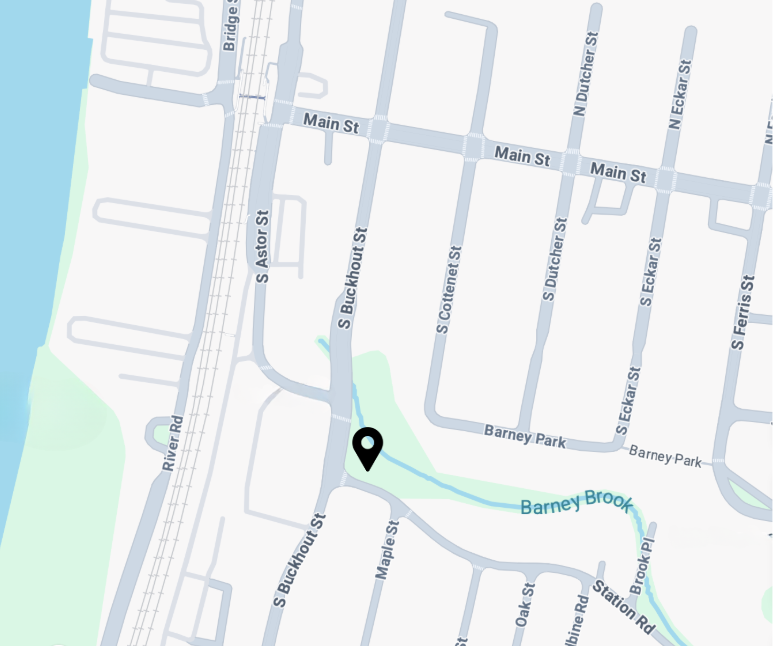
Commemorate successfully encouraged the Village of Irvington to establish the Enslaved African Memorial Park Committee, which is now advising on the design and construction of a memorial park at the northeast corner of South Buckhout Street and Station Road — a serene place of mourning, reflection, and remembrance.
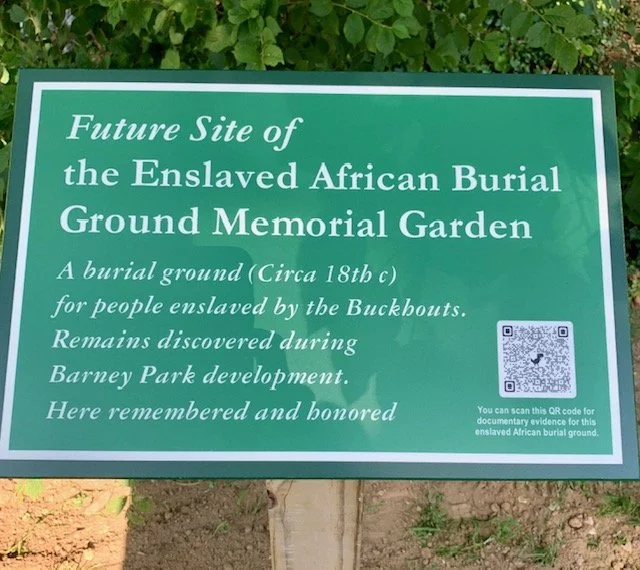
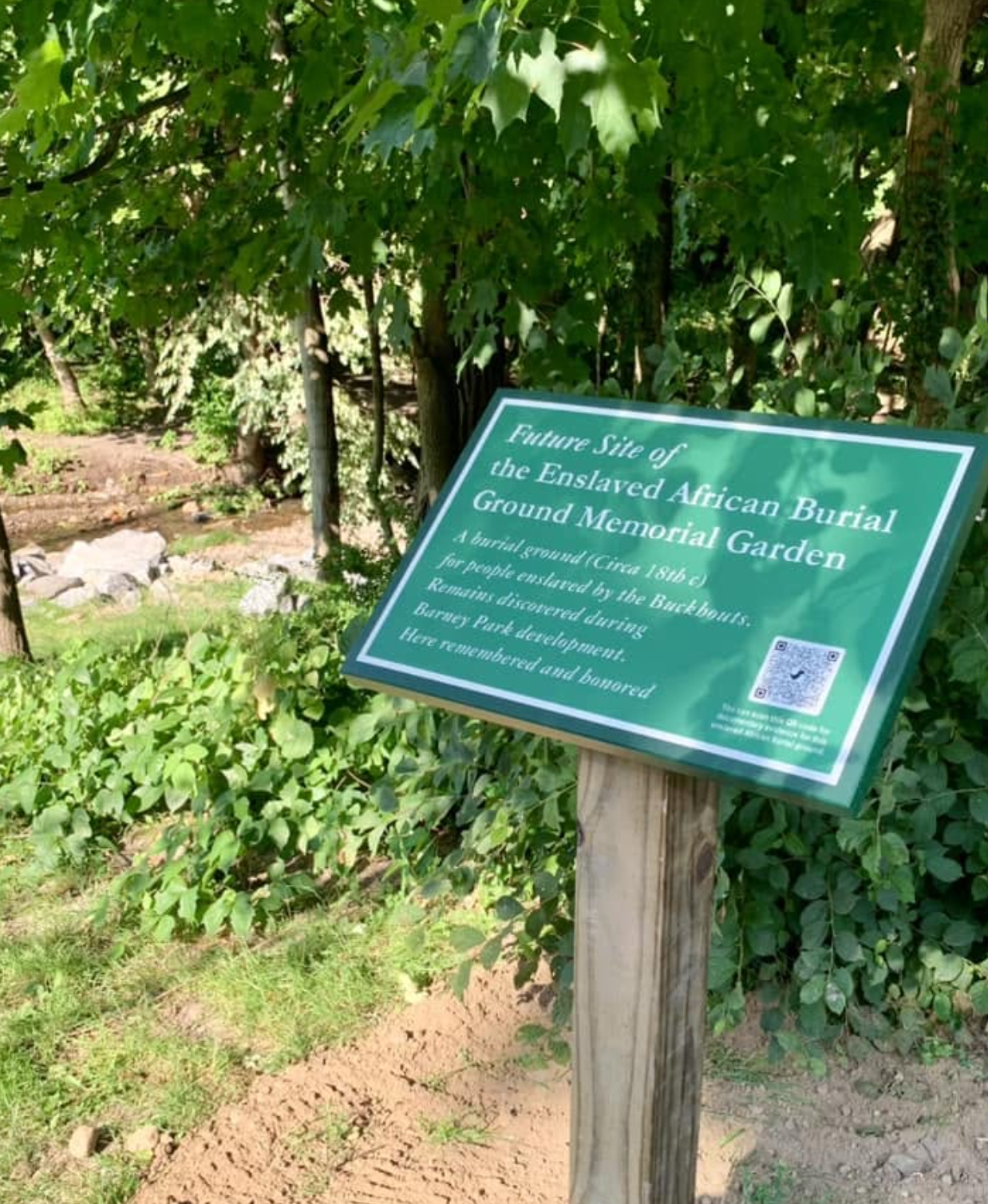
“A second tribute—a memorial garden, benches, and plaque by the Hudson River—will honor the area where an enslaved African burial ground was once located. This hallowed land will serve as a serene place of mourning and reflection for these people and their families.”
—Irvington Mayor Arlene Burgos